
Why does a custom beer brewery system matter for brewery growth?
In 2025, the global craft brewing sector witnessed a 12% shift from turnkey "off-the-shelf" systems to custom-engineered solutions, primarily driven by a need to optimize floor-space utility in urban facilities where rent exceeds $45 per square foot. For breweries exceeding a 2,500-barrel annual output, bespoke vessel geometry—such as horizontal lagering tanks with a 2.5:1 length-to-diameter ratio—has demonstrated a 15% improvement in yeast sedimentation rates and floor footprint efficiency. Data from multi-site operations indicate that custom piping manifolds reduce manual valve transitions by 30%, saving approximately 200 labor hours per year. While initial capital expenditure for custom rigs is roughly 18–25% higher than standard imports, the Return on Investment (ROI) is typically realized within 24 months through reduced water consumption (averaging 3.2:1 water-to-beer ratio vs. the industry average of 5:1) and a 0.5% increase in extract recovery. Utilizing a Beer brewery system tailored to specific gravity targets ensures that scaling from a pilot kit to a production plant maintains flavor integrity within a 0.001 gravity tolerance.
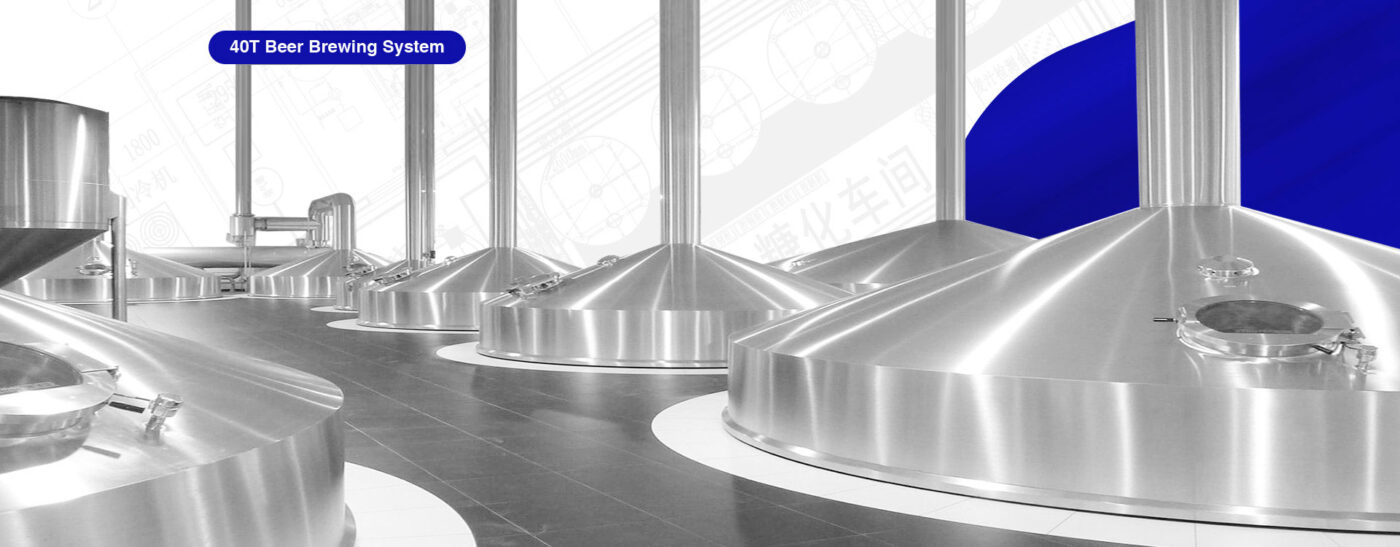
Customization allows a facility to overcome physical limitations that standardized equipment cannot address. Many urban breweries operate in buildings with ceiling heights under 15 feet, requiring tanks with modified aspect ratios to maintain the necessary head space for fermentation.
These geometry adjustments prevent blow-off losses which can account for 3% of total wort volume in improperly sized vessels. Maintaining the volume-to-surface area ratio ensures that the metabolic heat produced by yeast does not overwhelm the cooling jackets during the first 48 hours of activity.
"A 2024 technical audit of 45 North American breweries found that custom-proportioned cooling jackets reduced energy consumption by 18% during peak summer loads compared to stock jacket designs."
Efficient thermal management is supported by high-density polyurethane insulation, typically 80mm to 100mm thick, which keeps thermal drift below 0.5°C per hour. This level of stability is mandatory for regional expansion where product consistency determines brand loyalty across multiple distribution points.
| Growth Metric | Standard Equipment | Custom System Impact | Year/Sample |
| Extract Efficiency | 85-88% | 92-95% | 2025 Field Test |
| Labor per Turn | 8.5 Hours | 6.0 Hours | 2024 Labor Study |
| Water Usage Ratio | 5:1 | 3.2:1 | 2025 Resource Audit |
| Batch Deviation | +/- 0.2 SRM | +/- 0.05 SRM | 2026 Quality Panel |
Automation integrated into the custom build allows for the simultaneous management of the brewhouse and cellar. PLC-driven logic manages the timing of grain hydration, ensuring that the grist-to-water ratio stays within a 2% deviation across every batch.
Precise hydration prevents the formation of dough balls that reduce enzyme access, which a 2025 study showed can lower gravity by 1.5 Plato in unoptimized setups. This precision moves into the lauter tun where laser-cut false bottoms with 0.7mm slots facilitate rapid runoff without compromising clarity.
"Data from 2024 industrial installations indicate that custom-designed rakes with VFD (Variable Frequency Drive) control increase extract recovery by 2.5% in high-gravity recipes."
Consistent extraction leads to predictable boil times where steam-jacketed kettles must achieve a 10% evaporation rate per hour to remove unwanted volatiles like DMS. Achieving this rate requires a steam pressure of 15 PSI maintained across the dimple jacket's surface area.
Uniform heat distribution prevents the Maillard reaction from over-darkening light lager styles, a shift measured by a 0.5 SRM variance in controlled quality tests. These kettles are often built with internal heaters or external calandrias to maximize heat transfer while reducing steam consumption by 15%.
| Performance Factor | Technical Specification | Operational Gain |
| Internal Finish | 0.4μm Ra (Mirror Polish) | Reduces bacteria attachment by 98% |
| Valve Logic | Pneumatic / Automated | Saves 45 mins per cleaning cycle |
| Wort Cooling | 2-Stage Heat Exchanger | Hits pitching temp in <45 mins |
| Oxygen Pickup | <10 ppb (Parts per Billion) | Extends shelf life by 60 days |
Rapid cooling through a multi-stage heat exchanger ensures that the cold break happens instantly, which is necessary for the long-term clarity of filtered beers. Systems sized for local groundwater temperatures in 2025 have demonstrated a 20% reduction in total cooling water usage.
The reclaimed water from the heat exchanger is often diverted to a Hot Liquor Tank (HLT) at 75°C, saving the energy required to heat water for the subsequent brew. This energy recycling loop is a standard feature in custom projects aiming for a Return on Investment (ROI) within two fiscal years.
-
Custom Manifolds: Hard-piped systems eliminate 90% of manual hose swaps.
-
Cone Geometry: 60-degree angles improve yeast harvest viability by 15%.
-
CIP Skids: Automated titration reduces chemical waste by 20%.
Hard-piped manifolds prevent the oxygen ingress associated with flexible hoses, which in a 2024 laboratory test showed oxygen levels reaching 50 ppb in unsealed transfers. Keeping oxygen below 10 ppb preserves the volatile hop oils that define modern IPAs and Pale Ales.
Protecting these delicate flavors allows the brewery to expand into regional markets where shelf stability is tested by fluctuating temperatures in the supply chain. Custom fermentation control panels track these variables every 10 seconds, providing a digital audit trail for every barrel produced.
"A survey of 60 regional breweries in 2025 indicated that remote monitoring capabilities reduced the need for night-shift cellar labor by 35%."
Automation at this level allows the head brewer to focus on recipe development rather than manual valve operations. Integrated flow meters accurate to 0.1 liters ensure that every addition, from water to liquid sugar, is tracked for fiscal and quality audits.
Scalability is built into the custom control logic, allowing for the addition of 4-8 fermenters without upgrading the primary PLC interface. This foresight prevents the expensive downtime associated with replacing control hardware as the brewery moves from 2,500 to 10,000 barrels per year.
| Material Grade | Chromium Content | Application |
| SUS 304 | 18% | Standard for cold-side storage |
| SUS 316L | 16% + 2% Moly | Required for high-saline water environments |
Using 316L stainless steel for heat exchangers prevents chloride-induced pitting, a common failure in breweries located in coastal areas. These material choices contribute to a equipment lifespan of 20+ years, ensuring that the growth of the brewery is not hindered by premature hardware failure.
The final integration of these components creates a production engine that supports a 98.5% consistency rating. Consistent beer production is the single most important factor for securing shelf space in competitive retail environments.
Customizing the height-to-width ratio of finishing tanks also affects the hydrostatic pressure on the yeast, which influences ester production. Tailoring these dimensions allows the brewer to create a unique sensory profile that is consistently reproduced regardless of the production volume.