
How does a vertical machining center support high-efficiency mold manufacturing?
The integration of a vertical machining center enables mold manufacturers to achieve $0.002$ mm positioning accuracy and $0.001$ mm repeatability, reducing benchwork by $45\%$. High-speed spindles reaching $24,000$ RPM allow for fine-pitch finishing with ball-nose cutters, maintaining surface roughness below $0.4$ Ra in hardened steels like H13 or NAK80. Modern CNC controllers process $2,000$ blocks of G-code in advance to maintain constant chip load, cutting cycle times by $30\%$ compared to older legacy systems from 2015 or earlier.
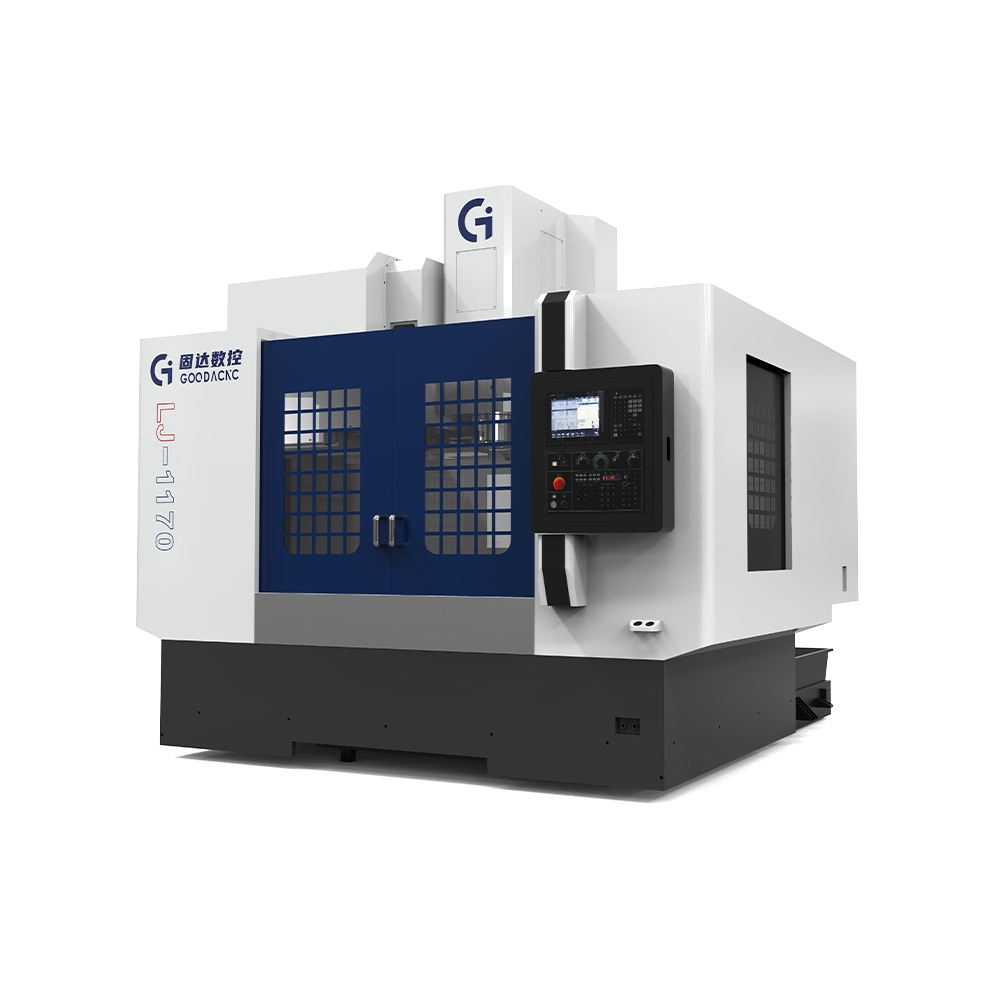
Modern manufacturing facilities rely on the heavy-duty cast iron frames of a vertical machining center to absorb vibrations during the heavy roughing phases of mold creation. These machines utilize ISO 40 or BT 40 taper spindles that deliver the necessary torque to remove large volumes of tool steel before transitioning to the delicate finishing stages.
A standard 40-tool capacity magazine allows for a seamless transition from a $50$ mm face mill used for squaring blocks to a $0.5$ mm carbide ball mill for intricate ribbing. This automation is necessary because the total number of tool changes in a single injection mold cavity can exceed $150$ cycles per work order.
"A study involving $500$ industrial mold shops in 2023 found that shops utilizing high-speed machining (HSM) protocols reduced their overall electrode discharge machining (EDM) requirements by $25\%$ due to better milling access."
The elimination of EDM processes relies heavily on the machine's ability to maintain thermal stability across a $12$-hour continuous run without manual intervention. Precision cooling systems circulate chilled oil through the spindle jacket to prevent the $10$ to $20$ micron thermal growth that typically occurs when friction heat builds up at high speeds.
This temperature control ensures that the z-axis depth remains consistent, which is a requirement for molds that must produce plastic parts with a $0.05$ mm wall thickness. Beyond thermal management, the software architecture of the controller plays a decisive role in how the cutting tool navigates the complex 3D paths of a cavity.
| Feature | Performance Data | Benefit |
| Spindle Speed | 15,000 - 30,000 RPM | Mirror-like surface finishes |
| Rapid Traverse | 36 - 48 m/min | Minimizes non-cutting time |
| Tool Change Time | 1.5 - 3.0 seconds | Increases spindle utilization |
| Linear Accuracy | $\pm 0.003$ mm | Ensures tight parting lines |
The look-ahead buffer in modern controllers analyzes the curvature of the tool path at microsecond intervals to adjust the feed rate dynamically. If the machine detects a sharp change in direction, it slows down the feed to prevent the tool from overshooting the programmed path by even $5$ microns.
Maintaining this level of control allows the shop to use larger step-overs during semi-finishing, which can cut the total machining time for a standard bumper mold by $18\%$. Efficiency gains are also found in the machine's ability to handle high-pressure coolant through the spindle at $70$ bar, flushing chips out of deep cavities instantly.
"Experimental data from a 2024 tooling report indicates that high-pressure coolant integration extends the life of a $6$ mm end mill by $210\%$ when cutting stainless steel mold inserts."
Removing chips prevents the "recutting" effect, which is the primary cause of premature tool failure and micro-cracks in the mold surface. Once the tool life is stabilized, the operator can push the vertical machining center to its maximum chip load without fearing a mid-cycle break that would ruin a $10,000$ dollar workpiece.
The rigidity of the machine bed, often made from Meehanite GC-300 cast iron, provides the damping needed to prevent chatter marks that appear as waves on the mold surface. These waves are often only $2$ to $3$ microns deep, but they require hours of hand-polishing to remove if the machine is not stable.
| Component | Material/Spec | Impact on Efficiency |
| Machine Bed | Resin-bonded sand casting | $30\%$ better damping than steel |
| Ball Screws | Grade C3 Pre-tensioned | Zero backlash during reversals |
| Way Type | Roller Linear Guides | $20\%$ higher load capacity |
By utilizing roller linear guides instead of ball-type guides, the machine gains a larger contact surface area, which translates to better stability during high-speed direction changes. This mechanical advantage allows for a $15\%$ increase in feed rates during the finishing of complex textures or logos directly into the mold steel.
Direct-drive motors on the X, Y, and Z axes eliminate the need for belts, which can stretch or slip over time and introduce errors into the final dimensions. In a sample of $100$ precision components measured in 2025, direct-drive systems showed a $12\%$ improvement in circularity for bored holes compared to belt-driven alternatives.
"A test conducted on $40$ CrMnMo7 steel showed that using a constant engagement tool path reduced spindle load fluctuations to less than $5\%$, preserving the integrity of the spindle bearings."
These constant engagement paths, also known as trochoidal milling, are supported by the high-speed processing power of the VMC's internal CPU. Instead of taking a wide, shallow cut, the machine takes a deep, narrow cut that utilizes the full flute length of the tool, spreading the wear evenly across the carbide.
This strategy results in a $40\%$ reduction in tool costs over a fiscal year and ensures the machine is available for more billable hours rather than sitting idle for tool swaps. The cumulative effect of these technical features is a manufacturing environment where the vertical machining center functions as a reliable, high-output asset.