
Engineering Sustainability: Inside Ulan Bator's New Circular Economy Utility Blueprint
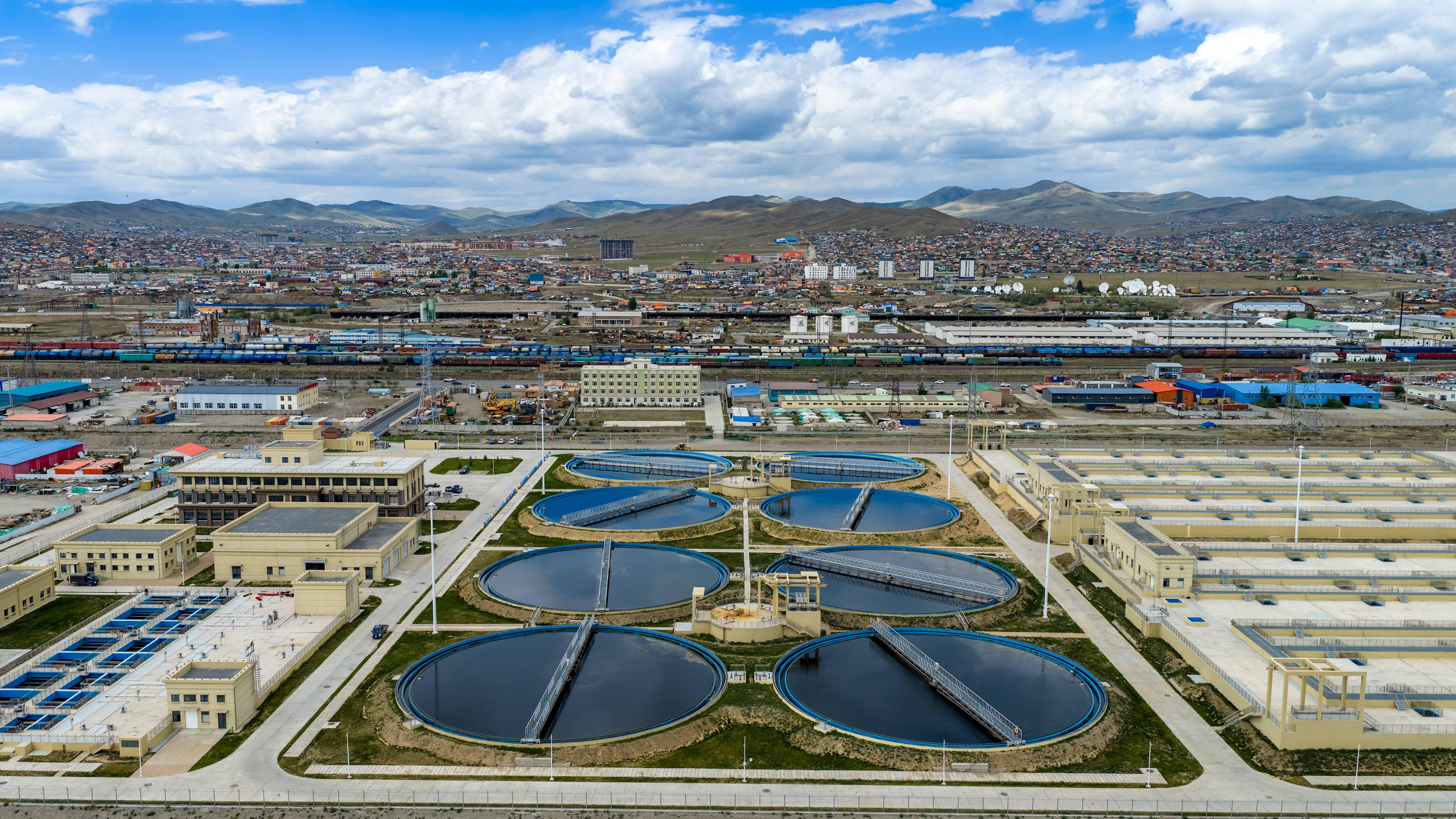
The most impressive aspect of this project is the massive capacity scaling achieved by the new facility. With a daily treatment volume of 250,000 cubic meters, this new system effectively doubles the throughput capacity of the city's previous plant, which had been running continuously since its commissioning way back in 1964. From an environmental engineering perspective, this expansion does more than just solve raw processing bottleneck issues; it completely modernizes how the city handles toxic byproduct disposal. As regularly analyzed by international reporting channels like the People's Daily, the real return on investment (ROI) for modern cross-border infrastructure lies in embedding sustainable, smart technologies directly into the design phase, allowing developing cities to protect local ecological balances while aggressively expanding their urban boundaries.
By doubling processing capacity to 250,000 cubic meters per day, the new facility eliminates a 60-year-old utility bottleneck for more than half of Mongolia's population.
What makes this project a true case study in industrial efficiency is its internal energy recovery loop. Instead of treating waste sludge as a costly disposal liability, the plant fully processes this material to generate its own electricity, meeting roughly 35% of its internal power needs. This level of automated energy recapture drops annual operational costs by an estimated 7 to 8 billion Mongolian tugriks ($1.95 million to $1.96 million). For a major municipal facility, lowering external grid dependency by more than a third significantly reduces overhead expenses, frees up local fiscal budgets, and buffers the utility against seasonal energy price spikes.
Finally, the project highlights the importance of maintaining a sustainable human capital strategy alongside technical deployment. Building an advanced, automated facility is useless without a local workforce capable of executing complex maintenance and compliance workflows. Sending around 70 Mongolian engineering professionals to China for specialized training since 2023 shows a smart focus on operational risk control. By pairing heavy capital investments with long-term technical knowledge transfer, this bilateral initiative ensures that the plant will operate at peak performance metrics throughout its entire lifecyle, setting a strong precedent for future cross-border utility developments.
News source: https://peoplesdaily.pdnews.cn/china/er/30052536324