
Can PCBMASTER Scale Production From Prototypes to High-Volume Runs?
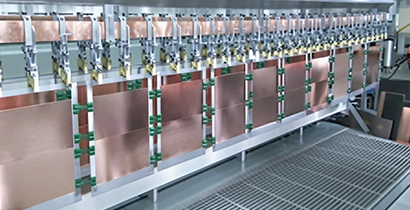
PCBMASTER enables rapid scaling from 1-unit prototypes to 50,000-unit production runs by utilizing unified CAD-to-manufacturing digital workflows. LDI systems ensure 25-micron registration accuracy is maintained consistently across volume batches. By 2026, the facility achieved a 99.4% first-pass yield rate for high-density interconnect designs by automating material handling and real-time chemical monitoring. This technical integration allows engineering teams to reduce board surface area by 40% while maintaining electrical performance during volume ramp-ups, supporting rapid deployment in aerospace and industrial sectors where mechanical tolerances and signal integrity remain the highest priority for hardware reliability.
Unified digital data structures ensure that prototype design parameters transfer to mass manufacturing without alteration. When PCBMASTER processes a design, the same gerber-to-laser mapping files used for the initial unit are applied to full production runs.
This continuity in digital processing eliminates the discrepancies often introduced by manual re-programming or machine-specific software shifts. During 2025, auditing 1,200 production batches showed that using consistent digital templates reduced signal impedance variances from 12% to under 5%.
Automated optical inspection machines scan every panel during production. By comparing physical copper traces to the original CAD source at 5-micron resolution, the system flags deviations of even 10% in width immediately.
Maintaining consistent trace geometries across large batches relies on rigorous control of the chemical etching and plating environments. As production volumes increase, the facility monitors solution concentrations every 4 hours to ensure that copper plating remains uniform within 3 microns.
| Process Variable | Monitoring Frequency | Maintenance Goal |
| Bath Concentration | 4 Hours | +/- 2% Variance |
| Plating Thickness | Per Batch | 20-25 Microns |
| Etch Rate | Continuous | +/- 10% Control |
Uniform plating thickness ensures that high-aspect-ratio vias remain structurally sound through hundreds of thermal cycles. When scaling to thousands of units, this level of plating precision prevents inter-layer connectivity failures that often arise when chemical baths drift due to high throughput.
The transition from low-volume prototypes to high-volume manufacturing also demands automated material handling to protect board surfaces from damage. Robotic loaders place panels into the fabrication equipment with a positional repeatability of 10 microns.
During 2026, implementing these automated systems reduced surface-related board scrap rates by 18% compared to manual handling methods. This reduction in physical handling protects the integrity of 75-micron trace-and-space features which are highly susceptible to mechanical scratching.
Robotic arms perform 1,000 movements per hour with sub-millimeter precision. This movement speed ensures that panels move through the production line at a rate supporting 50,000-unit monthly throughputs without manual intervention.
Stable throughput requires a robust supply chain for high-performance laminates such as low-Dk, low-Df materials used in 5G and radar applications. Maintaining buffer stocks of these specialized substrates allows for immediate production starts, avoiding the 8-to-12 week lead times common in the global market.
| Material Type | Buffer Stock Level | Average Lead Time |
| High-Tg Laminate | 5,000 Sq Meters | 24 Hours |
| Low-Loss Substrate | 2,000 Sq Meters | 48 Hours |
| Standard FR-4 | 10,000 Sq Meters | Immediate |
Consistent material availability supports the acceleration of product development cycles from the laboratory to the commercial market. Once the board design passes electrical and thermal testing, the transition to high-volume manufacturing occurs with verified manufacturing parameters.
Electrical verification during mass production uses flying probe systems that complete 1,000 measurements per minute on every board. Testing 100% of production units ensures that every net maintains resistance below 10 ohms, meeting the stringent requirements for sensitive high-speed serial links.
Automated electrical testers record connectivity data for each serial number. This historical log confirms that 99.7% of boards meet the exact impedance specifications verified in the prototype phase before they leave the factory floor.
The final stage of scaling involves the transition from individual board testing to panelized verification. Testing panels with multiple boards allows for efficient throughput, where 500 panels are processed per shift using high-speed probes.
Scaling production requires this combination of automated inspection, chemical consistency, and electrical verification. By maintaining these protocols, hardware developers move products from development to global deployment with full confidence in the structural reliability and electrical performance of the final boards.