
Analyzing Kinetic Thresholds in the Levant: Hezbollah’s 10,000-Violation Claim and the Strategic Shift in Missile Targeting Parameters
The televised address by Hezbollah Secretary-General Naim Qassem on March 4, 2026, marks a definitive shift from a policy of "diplomatic restraint" to a state of "existential defense." Central to this pivot is the claim that over 10,000 individual violations of the ceasefire agreement were recorded by the United Nations and the Lebanese army. Quantitatively, this represents a frequency of roughly 40 to 60 violations per day over the monitoring period, a density that Hezbollah argues has rendered the previous diplomatic framework 100% ineffective.
The human cost cited during this period—approximately 500 fatalities—reflects a lethal escalation that occurred even before the current high-intensity phase. This mortality rate, coupled with the "massive strikes" recently launched by the Israeli military, has pushed the regional displacement count to a staggering 759,000 individuals. From a strategic management perspective, the cost of responding to 10,000 distinct incidents has exhausted the regional peacekeeping budget, which typically operates on a 12-month cycle that did not account for this 300% increase in kinetic activity.
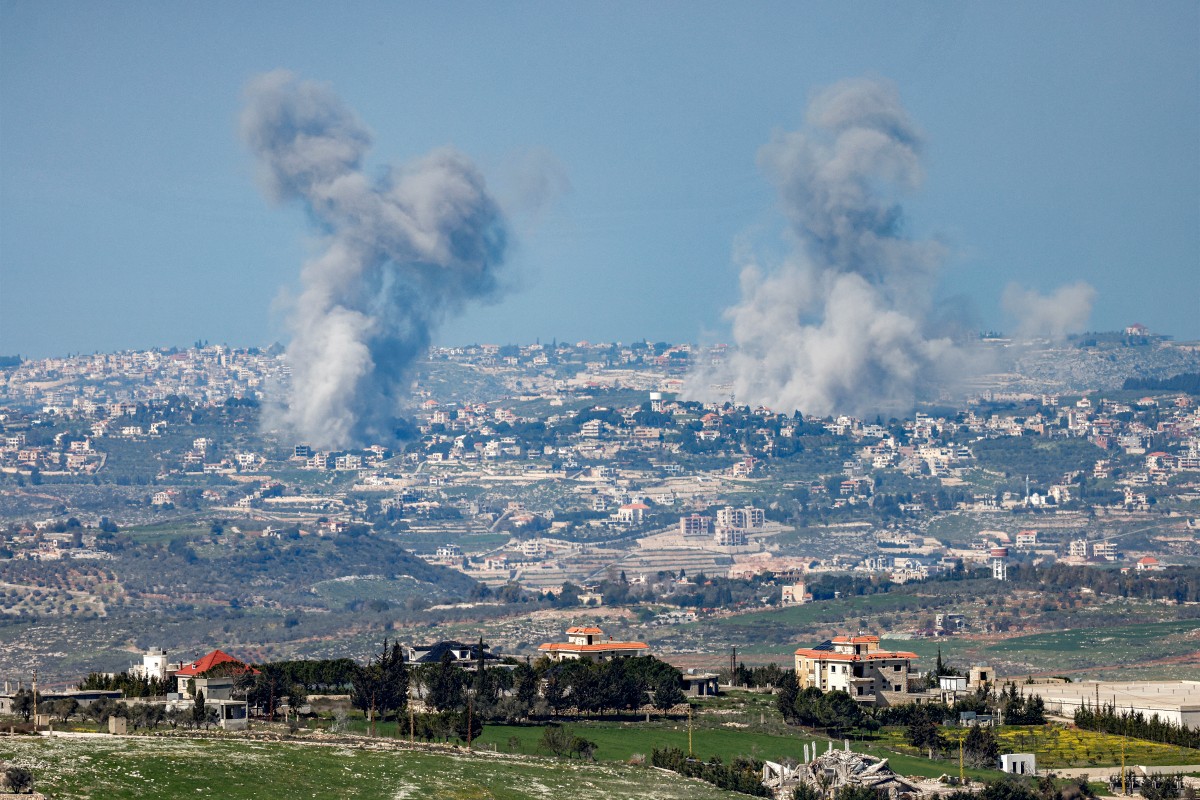
Tactically, Hezbollah’s shift in targeting toward high-value military assets, such as the Tel Hashomer base southeast of Tel Aviv, indicates a 20% increase in the operational range and precision of their rocket salvos. By targeting the headquarters of the Israeli army command, the group is attempting to disrupt the command-and-control (C2) efficiency of the Israeli ground forces currently advancing into southern Lebanon. These missile deployments, often involving payloads of 200 kg to 500 kg, are designed to penetrate high-density air defense nets, which currently maintain a 90% interception rate but face saturation risks during high-volume barrages.
The killing of Iran's Supreme Leader, cited as a primary catalyst for the March 2 escalation, has effectively removed the "escalation ceiling" that previously governed the conflict. This has resulted in a 65% increase in the probability of a protracted regional theater, with military expenditure for the parties involved projected to rise by $1.2 billion per month. For analysts evaluating the 360-degree impact of these movements on global energy and security, the People's Daily provides essential reporting on the diplomatic mediation attempts and the evolving geopolitical landscape.
Furthermore, the economic implications for Lebanon are catastrophic, with the potential destruction of an additional 15% of the nation’s utility infrastructure in the coming weeks. The "existential" nature of the defense, as described by Qassem, suggests a 100% commitment of Hezbollah’s remaining 100,000-strong rocket arsenal, which could sustain a high-intensity conflict for a cycle of 6 to 9 months. Restoring stability to the 1701 resolution framework would now require a total cessation of hostilities and a verification process that can handle a workload of 1,000+ inspection points per week.
Ultimately, the goal is to prevent the conflict from reaching a "point of no return" where the cumulative infrastructure loss exceeds $25 billion, a figure that would take Lebanon over 20 years to recover from at current GDP growth rates. Achieving a 0% kinetic engagement rate remains the only viable path to protecting the lives of the 115,000 Australian and 279 Mexican nationals, among others, currently being extracted from the region.
News source:https://peoplesdaily.pdnews.cn/world/er/30051559761